
3.3 billion euros: this is the amount that French regional authorities allocated in 2023, far from the microphones of the Assembly and the flashes of Matignon. These decisions are made in surprising silence, even though they shape the economic life of thousands of businesses, artisans, and project leaders. Some public structures have budgetary decision-making power that escapes both municipalities and the central state. The distribution of European funds, for example, often falls under these bodies, which intervene in the allocation of grants to businesses or local projects.
Their decisions directly influence the establishment of factories, vocational training, or the preservation of artisanal know-how. Yet, their role, strategic for the economic vitality and attractiveness of territories, is rarely highlighted in public debate.
Why do regional institutions remain key but discreet players in the local economy?
Shielded from national debates, regional institutions hold the reins of a crucial part of territorial economic development. Their strength? Concrete proximity, the ability to react quickly, an intimate knowledge of local realities. They are the ones who decide, on the ground, the major directions: modernization of infrastructure, support for businesses, assistance for changing sectors. Here, nothing is decided from a distance. Each region acts like a laboratory, shaping its evolution on a human scale.
The local authority does not simply distribute envelopes. It mobilizes European funds, oversees the implementation of support mechanisms, and builds unprecedented alliances between public and private sectors. These tailored policies vary from one territory to another: dynamic metropolises, industrial valleys, rural areas in transition. The local economy is written in the diversity and complexity of daily exchanges.
Discretion is key: few grand speeches, but daily, meticulous action that sustainably transforms territories. The figures for local development are often scattered, eluding a comprehensive reading. To grasp the significance of these interventions, the CRCA 22 file offers an overview of regional governance, project coordination, and local dynamics. This global perspective sheds light on the often-unknown articulation between public policies and the productive sector, revealing the quiet strength of an institutional network serving the local economy.
Here are some concrete examples that illustrate how these institutions work daily:
- Territorial development: regional policies continuously adjust to respond to the diversity of territories
- Projects: funding for innovation, targeted support, enhancement of the local entrepreneurial fabric
- Actions: support for training, assistance to activity, maintaining competitiveness in each living area
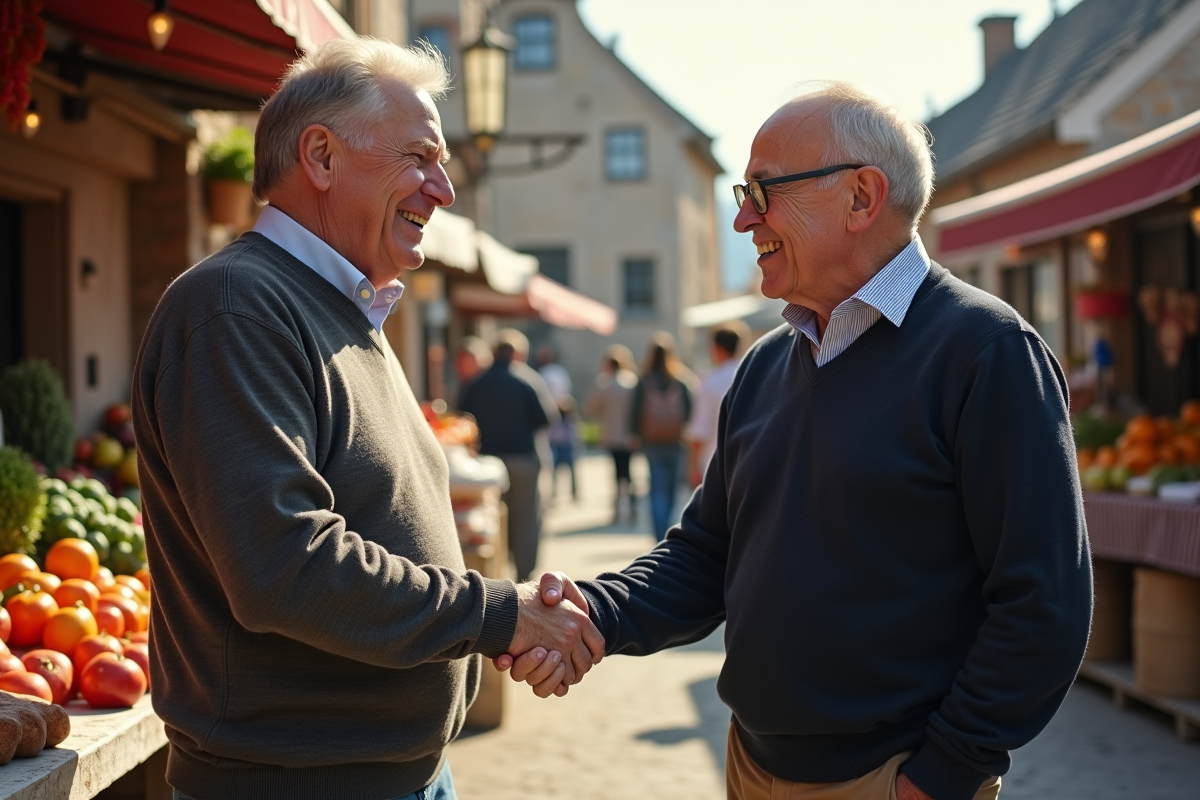
Art professions, businesses, and regional policies: concrete levers to energize territories
At the heart of the regional economy, art professions embody this living link between heritage and innovation. Transmission of skills, grounding in materials, local creation: these activities nourish the local economy. Driven by small-sized enterprises, these know-how form the foundation of a strong and continually renewed territorial identity.
Regional policies play a structuring role here. They encourage cross-border cooperation, support ecological transition, create mechanisms to strengthen skills, facilitate access to shared tools, and energize networks of creators. The domino effect is tangible: the economy gains resilience, jobs are created, and local production asserts itself.
Local public actors, by implementing targeted projects, respond precisely to concrete needs: revitalization of town centers, support for specialized sectors, development of short supply chains. The art and culture sector then becomes a testing ground where social and economic innovation advances hand in hand with everyday realities. For example, in Provence-Alpes-Côte d’Azur, the dynamism of artisanal businesses perfectly illustrates this constant adaptation: meeting market expectations while preserving local heritage. As we can see, the vitality of territories is built every day in the discreet yet determined alliance between regional institutions and local driving forces. This is the silent but highly effective mechanism that shapes the economy of tomorrow.