
A worn jersey proudly sits above the sofa, a scarred lawn hidden behind the church: here, football does not just make an appearance, it asserts itself. Every alley, every bench, every bakery front buzzes with conversations where the round ball takes center stage. The stadium is just one backdrop among many: the real game is played on the café terrace, at the market stall, in the daily hustle and bustle.
As the light fades, memories circulate, shared pride without ostentation. Some carefully keep cleats that bear witness to a forgotten final, while others resonate with songs born on makeshift benches. Here, football is solid, a foundation on which the story of a neighborhood is built, the attachment to a city, or the history of a family. It draws secret lines between generations, connects the old with the newcomers, and gives a soul to every alley.
When the ball shapes the identity of towns and villages
It is impossible to understand France without grasping the place of football, this popular sport that has become a local landmark. Behind the flashy facade of the big teams, it is the local communities and supporters who keep the legend alive, season after season. A municipal stadium, funded by the town hall, is not just a lawn: it is the beating heart of the area, the stage for all shared joys and sorrows. Every goal, every rise or fall, becomes a chapter in the collective memory.
Social cohesion is nourished by these small clubs that, far from the spotlight, shape collective identity. Elected officials invest themselves, proud to carry the colors of their town on the shoulders of their teams. In Reims, Rennes, Lyon, or Bordeaux, it is impossible to dissociate the club from the urban landscape: it counts as much as a river or a cathedral. Even in Paris, the Seine does not erase the place occupied by football in the life of the capital.
- Football clubs are rooted in the social fabric, supported by networks of supporters who forge unique traditions in every corner of France
- Stadiums become the places where the collective story is written, where shared memories are woven
- The pride of victories and the nostalgia of defeats are passed down from generation to generation, integrating football into family history
A simple detour through the history of the AJA 1905 – “The Unforgettable Moments of AJA 1905: Retrospective – Le Monde du Sport” – is enough to measure the impact of the round ball. The Auxerrois, marked by decades of struggle and exploits, lives to the rhythm of its club, which far exceeds the realm of sport to become a living memory. Through football, each municipality draws its own story, far from national spotlights, but with an intensity that nothing can match.
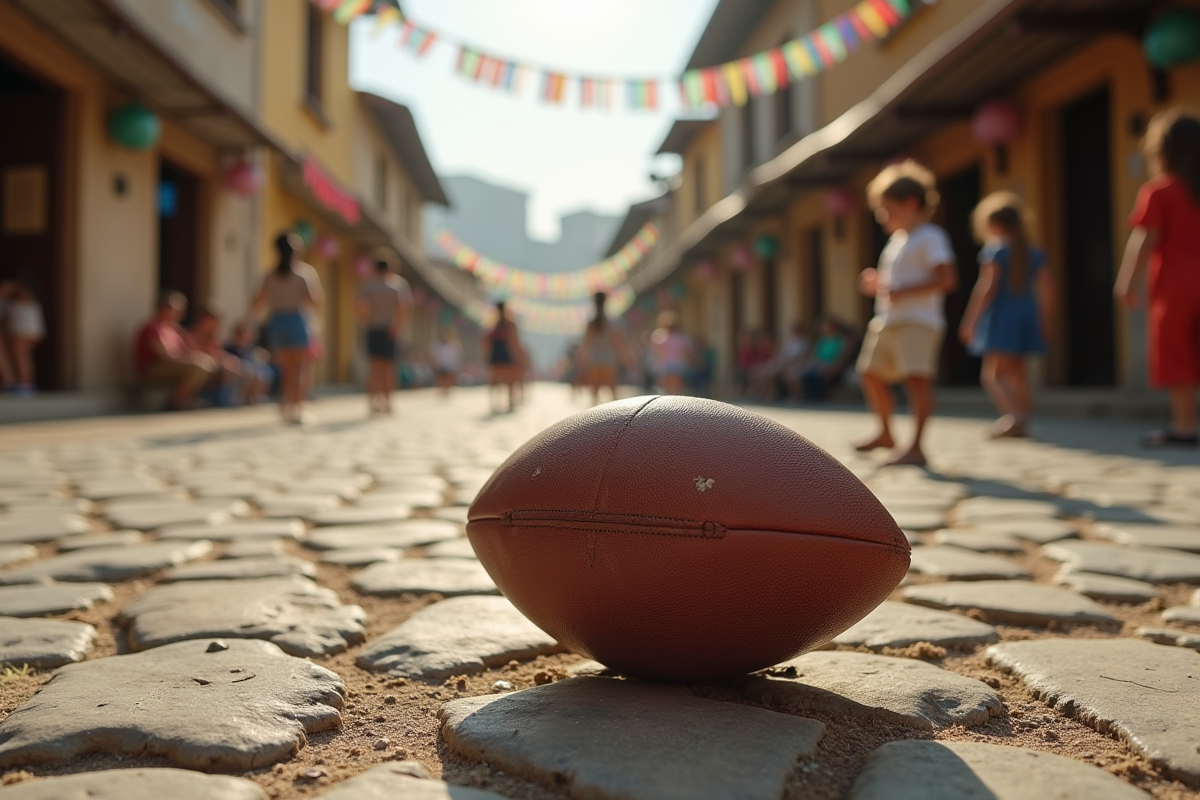
Transmission, passion, and memory: how football is experienced as a local heritage
Football did not wait for globalization to anchor itself in people’s lives. From medieval soule to the first games of cuju in China, the game has traversed centuries and adapted to each territory. While 19th-century England laid down the rules, France has managed, in its own way, to graft its historic clubs and local traditions, asserting a distinct identity.
Passing the torch is much more than teaching a technical gesture: it is sharing a whole living heritage.
- In families, passion joins the table, is passed down in the stands, and is recounted during gatherings: a club then becomes the common thread of an entire lineage
- Neighborhood associations welcome children, creating strong bonds and a sense of belonging that far exceeds the context of matches
The FIFA, established in 1904, orchestrates the grand masses of the round ball. But its influence stops where local fervor begins. In 1930, during the first World Cup won by Uruguay, every goal recounted thereafter became family legend. Major competitions and the Olympic Games may attract crowds, but it is the memories forged at the local stadium or on the vacant lot next door that truly matter.
Football, a driver of soft power and integration, infiltrates everywhere. The millions generated by TV rights and sponsorship have not erased the fervor of small towns. With each passing of the torch, with every story told, the ball becomes a living archive, a passion transmitted, a legacy that defies time. Here, football is not just a game: it is a collective treasure, patiently shaped, passed down like a precious secret. Tomorrow, somewhere between the square and the village square, there will always be a child to discover it in turn.