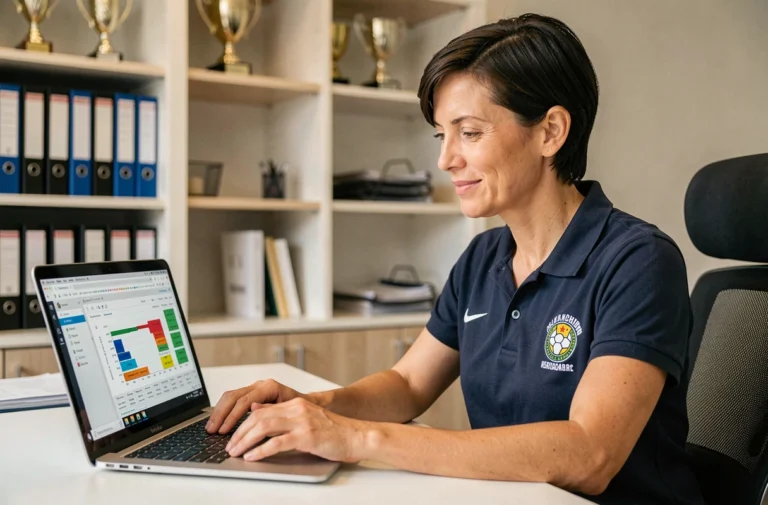
In 2024, the majority of educational institutions require the use of at least one digital platform for class management and communication with families. However, the range of tools remains fragmented across academies, levels, and subjects. Each year, hundreds of new applications are referenced by the Ministry of Education, but only a few establish themselves sustainably in daily use.
The lack of harmonization sometimes hinders the integration of digital technology into teaching practices. Despite these discrepancies, certain digital solutions stand out for their effectiveness and ease of adoption, becoming essential support points for teaching teams.
What digital tools to support teachers and students at the start of the school year?
The back-to-school season sets the pace and disrupts habits. In the face of diverse expectations on the ground, digital tools for education become true allies, capable of supporting organization, encouraging dialogue, and facilitating daily pedagogical follow-up.
Relying on well-chosen digital resources not only strengthens student autonomy but also lightens class management for teachers. On the menu: platforms for document sharing, spaces dedicated to exchanges between teachers and families, solutions for online learning. While the French digital ecosystem is full of possibilities, it can quickly become overwhelming. The challenge is to target the tools suited to each context, each cycle, each team.
Here are some structuring uses that will be established from the start of the school year and energize work in class as well as remotely:
- Simplified access to educational digital services to share and pool pedagogical resources;
- Centralized monitoring of schooling through dedicated and interconnected platforms;
- Conducting collaborative projects on smartphones, tablets, or computers to encourage creativity and student involvement;
- Training in media and information literacy (Emi), a strategic focus for better deciphering the avalanche of information.
The Créteil academy, for example, offers Webmel in Créteil, a key platform to streamline communication and information management between teaching teams. Optimize your use of Webmel AC Créteil – Intronaut to save time and enhance coordination between school life, student monitoring, and professional exchanges.
Online learning platforms also enrich classroom practices. They provide the opportunity to adjust support according to student profiles, track their progress in real-time, and enhance their autonomy. By varying the materials and approaches, each teacher can offer differentiated support and unite around the common educational project.

Effectively integrating essential platforms into school organization: tips and best practices
The back-to-school season pushes teaching teams to rethink their digital uses. From primary school to vocational high school, collective success depends on a progressive and structured implementation of learning platforms and educational digital services.
To gain efficiency, it is wise to prioritize team ownership: exchanges among colleagues, sharing experiences, identifying needs specific to each cycle. Well-chosen and methodically deployed, digital tools transform class management, facilitate the flow of documents, and make access to digital resources smoother for everyone.
Some simple principles help anchor these uses over time:
- Centralize access to learning platforms to avoid resource dispersion;
- Establish clear protocols for data management, secure storage, sharing of videos or collections of activities;
- Involve parents and students from the discovery of these tools to develop autonomy and trust;
- Organize regular training sessions so that each team masters the functionalities and evolves its uses.
Connecting via smartphone, tablet, or computer should remain an asset, never a constraint. Adopting a flexible organization, adapted to the realities of each institution and each class, helps integrate platforms in a relevant way. When the entire educational community engages in this dynamic, collaborative tools become a true engine of innovation and shared commitment.
With each new school year, technology enters the classrooms. It remains for everyone to carve their path among the platforms, to transform digital tools into levers of emancipation and collective intelligence.